
The first hours after farrowing are the most critical period in a piglet’s life. Immediate attention, especially ensuring early colostrum intake, determines survival, immunity, strength, and lifelong performance. At Lua Farms, we follow proven neonatal care procedures to give every piglet a strong start, and we are committed to sharing these practices with beginners in pig farming to help them build successful and well-managed herds.
1. Ensuring Early and Adequate Colostrum Intake.
Colostrum is the first milk produced by the sow, and it is the single most important factor for piglet survival. Piglets must receive colostrum within the first 4–6 hours after birth, when their intestines are still able to absorb the antibodies effectively. During this period, the sow’s colostrum is at its highest quality—rich in immunity-boosting antibodies, energy, and protective nutrients.
After the first few hours, colostrum quality begins to decline rapidly. By 6 hours, antibody levels start dropping; by 12 hours, they decline sharply; and after 24 hours, the sow produces normal milk with very little immune protection. This makes early suckling critical for strong immunity, warmth, and long-term growth performance.
Colostrum provides:
- Strong immunity through high antibody content
- Immediate energy for warmth and activity
- Protection against early-life infections
- A solid foundation for growth and survival
Some piglets are born weak or unable to compete with stronger littermates. To support them:
- Dry the piglet immediately to prevent heat loss.
- Move the weak piglet closer to a functional teat.
- Hold the piglet gently and guide its mouth onto the teat.
- Allow it uninterrupted suckling time (5–10 minutes).
- If extremely weak, milk the sow and hand-feed with a syringe or small bottle (1–2 ml at a time).
- Keep weak piglets in a warm area (30–34°C) before returning them to the sow.
Managing Pale or Low-Circulation Piglets:
Some piglets appear pale or cold due to poor blood circulation. They need urgent attention:
- Warm the piglet using a heat lamp or any accessible heat source
- Gently rub the body to stimulate blood circulation.
- Ensure immediate colostrum intake once stable.
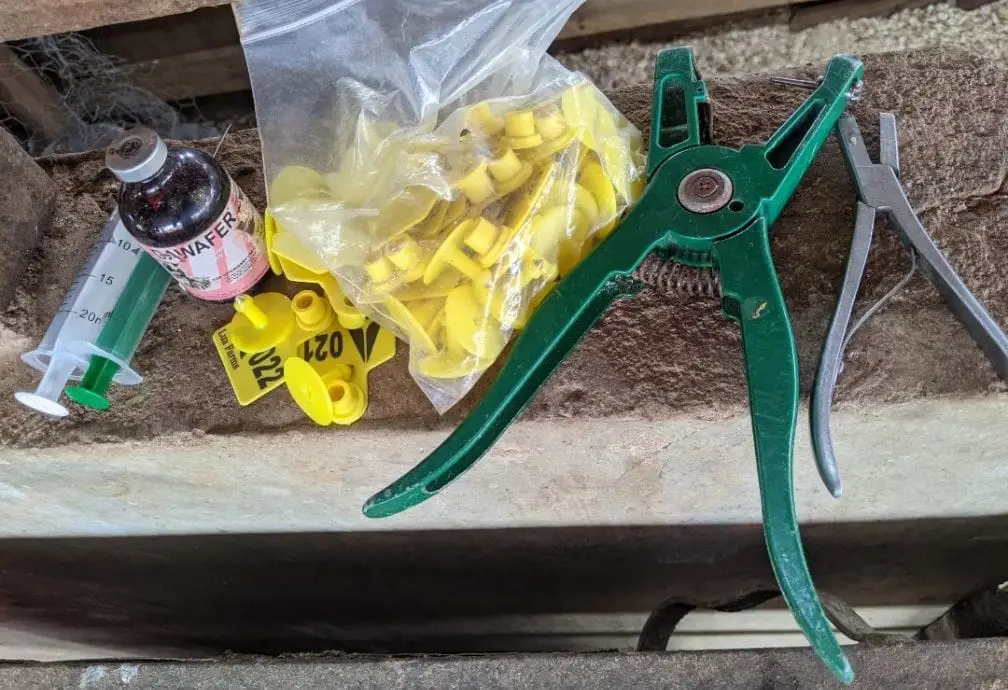
2. Intramuscular Iron Supplementation.
Piglets are born with very low iron reserves. Without supplementation, they may develop anemia, which leads to weakness, poor growth, and poor disease resistance.
Why Iron Is Important:
- Supports healthy red blood cell formation
- Improves oxygen circulation
- Prevents pale, weak piglets
- Enhances weight gain
- Reduces pre-weaning mortality
Best Practice:
Administer 1–2 ml of iron dextran intramuscularly (neck muscle) at 24–72 hours after birth.
3. Teeth Clipping
Piglets are born with eight sharp “needle teeth.” If these teeth are not clipped, they can easily injure the sow’s udder and teats during suckling. When piglets fight for teats, they may also bite each other, causing cuts and wounds on their faces.
Why teeth clipping is important:
Prevents udder and teat injuries on the sow: Sharp teeth can scratch or cut the sow’s teats while piglets compete to suckle. These injuries are painful and may cause the sow to avoid lying down, limit milk let-down, or even refuse to feed the litter.
Reduces facial wounds among piglets: Piglets often fight for the best teats, and the needle teeth can cause cuts on each other’s faces, leading to infections.
Lowers the risk of mastitis: Injuries to the sow’s teats can lead to bacterial infections, which can cause mastitis—a painful inflammation of the udder that reduces milk production.
Improves suckling for the entire litter: When the sow’s teats are healthy and piglets are not injuring each other, the whole litter feeds more calmly and efficiently.
Best Practice:
Clip only the tip of the needle teeth within 24–48 hours using sterile clippers.
4. Ear Tagging for Identification.
Identification is essential for managing performance, breeding, treatments, and herd organization.
Benefits:
- Accurate tracking of growth and health
- Organized vaccination and treatment records
- Improved selection of future breeding pigs
Best Practice:
Tag piglets within the first 72 hours using clean and disinfected tools.
5. Additional Recommended Care.
A. Temperature Management:
Piglets lose heat quickly. Provide a warm creep area at 30–34°C.
B. Drying and Cleaning:
Immediately dry piglets after birth to prevent chilling and reduce mortality.
C. Navel Cord Care:
Dip the navel in iodine to prevent infections.
Conclusion:
Strong neonatal care begins with ensuring a piglet receives enough colostrum and is warm, active, and breathing well. Supporting weak or pale piglets, giving iron injections, clipping teeth, tagging for identification, and maintaining hygiene all contribute to higher survival rates and healthier pigs. At Lua Farms, we remain committed to sharing practical, science-based pig farming knowledge to support beginners in the pig farming business.